Chemical Safety Pictograms – GHS, UN, NFPA, ADR & IMDG Hazard Codes
PDF · 15 pages · English · Chemical Safety
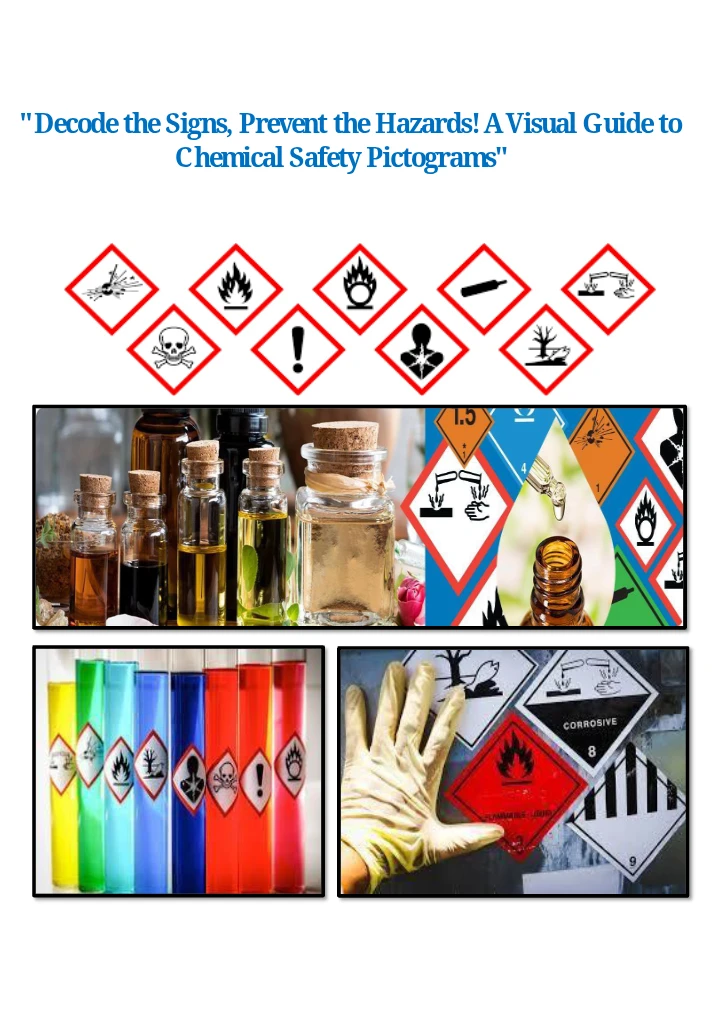
A 15-page visual guide explaining chemical safety pictograms and hazard identification systems, including GHS, UN hazard classes, NFPA 704, ADR and IMDG transport codes.
By Saurabh Rawat · Published 2026-09-30 · Updated 2026-11-14
From the document
"Decode the Signs, Prevent the Hazards! A Visual Guide to Chemical Safety Pictograms"
FLA ME HAZARDS “These chemicals burn or can release gases that burn.” Organic peroxides Emits Flammable Gas Pyrophoric Self- reactive Self- heating Flammable
FLAME OVER CIRCLE “These chemicals give off oxygen and can make a fire spread.” “Oxidizers are hazardous materials that can increase the risk of fire or explosion.” HAZARD Oxidizers
EXPLODING BOMB “These chemicals can explode.” HAZARDS EXPLOSIVES SELF - REACTIVE ORGANIC PEROXIDE
GAS CYLINDER “Gases and liquids under pressure can explode.” “This pictogram is used for both pressurized gases and liquefied gases such as liquid nitrogen.” HAZARD GASES UNDER PRESSURE
CORROSION “These chemicals cause permanent damage to skin or eyes.” “These chemicals destroy metals.” SKIN CORROSION/ BURNS EYE DAMAGE HAZARDS CORROSIVE TO METALS
HEALTH HAZARDS “These chemicals cause serious health problems.” “Some problems show up immediately, but some may show up much later.” HAZARDS CARCINOGEN MUTAGENI- CITY REPRODUC- TIVE TOXICITY RESPIRATORY SENSITIZER TARGET ORGAN TOXICITY ASPIRATION TOXICITY
SKULL & CROSS-BONE “These chemicals are poisons that quickly cause …
chemical safety · chemical pictograms · ghs · ghs pictograms · ghs01 · ghs02 · ghs03 · ghs04 · ghs05 · ghs06
Read Chemical Safety Pictograms – GHS, UN, NFPA, ADR & IMDG Hazard Codes online
- Chemical Process Safety: Fundamentals with Applications – Fourth Edition
A comprehensive chemical process safety textbook covering the fundamentals, engineering principles, hazard identification, risk analysis, fire and explosion prevention, chemical r…
- Chemical Safety Training
A 39-page chemical safety training presentation covering chemical hazards, routes of exposure, health effects, hazard controls, OSHA Hazard Communication requirements, GHS labelin…
- Basics of Chemical Safety in the Workplace
A practical chemical safety infographic covering chemical hazards, GHS labels, PPE, safe handling practices, emergency preparedness and workplace chemical safety awareness.
- Chemical Hazard Communication – CHIP, CLP & GHS
A visual reference comparing CHIP, CLP and GHS chemical hazard communication systems, including classification, labelling, pictograms, hazard statements, precautionary statements…
- MSDS / SDS – A Complete Guide to Material Safety Data Sheets, Chemical Safety & Legal Requirements in India
A comprehensive 33-page guide explaining Material Safety Data Sheets (MSDS), now commonly referred to as Safety Data Sheets (SDS), and their role in chemical hazard communication,…
- Chemical Compatibility Guide
A comprehensive chemical compatibility guide for selecting suitable pump materials based on compatibility with different chemicals. The guide provides compatibility ratings for me…
- Anhydrous Ammonia (NH₃) Safety Guidelines and Best Practices
Anhydrous Ammonia (NH₃) is a highly effective nitrogen fertilizer and industrial refrigerant. Due to its corrosive, toxic, pressurized, and extremely cold properties when released…
- Chemical Storage Safety – Guidelines for Safe Chemical Handling and Segregation
A 37-page training presentation covering safe chemical storage, hazard identification, chemical compatibility, segregation, labelling, inspection, and storage requirements for haz…
