


Introduction
Hazardous Waste Rules 2016, officially known as the Hazardous and Other Wastes (Management and Transboundary Movement) Rules, 2016, are India’s primary legal framework for the environmentally sound management of hazardous and other wastes.
Every drum of spent solvent, every tonne of zinc ash, every shipment of used lead-acid batteries crossing India’s ports — all of it falls under one law: the Hazardous and Other Wastes (Management and Transboundary Movement) Rules, 2016 (“HOWM Rules, 2016”), notified by the Ministry of Environment, Forest and Climate Change (MoEFCC) on 4 April 2016. These rules govern how hazardous and other waste is generated, stored, transported, recycled, treated, disposed of, imported, and exported across India.
Since notification, the HOWM Rules, 2016 have been amended ten times — from July 2016 through November 2024 — with the two most significant amendments (2022 and 2023) adding entirely new Extended Producer Responsibility (EPR) frameworks for waste tyres and used oil. This article walks through the principal rules and every amendment since, in plain language, for EHS professionals, compliance officers, importers, exporters, recyclers, TSDF operators, and students who need a working understanding of the framework — not just a clause-by-clause reproduction.

From 2008 to 2016: Why the Rules Changed
The HOWM Rules, 2016 superseded the Hazardous Waste (Management, Handling and Transboundary Movement) Rules, 2008. Persons already authorised or registered under the 2008 Rules were grandfathered — their existing authorisation or registration remains valid until its own expiry, without needing a fresh application under the 2016 Rules.
The 2016 Rules also broadened scope beyond “hazardous waste” to “hazardous and other wastes” — a distinction that matters for import/export in particular, since “other wastes” (defined by reference to Parts B and D of Schedule III) follow a lighter compliance path than wastes formally classified as hazardous.
Scope and Applicability
The HOWM Rules, 2016 apply to:
- Occupiers, importers, exporters, transporters, recyclers, and disposal facility operators handling hazardous or other waste.
- All hazardous and other waste as specified across Schedules I to VI, and (since 2022–2023) waste tyres under Schedule IX and used oil under Chapter VII.
The rules do not apply to:
- Waste-water and exhaust gases, which are covered under the Water (Prevention and Control of Pollution) Act, 1974 and the Air (Prevention and Control of Pollution) Act, 1981.
- Ship-generated waste beyond 5 km of the baseline, which is covered under the Merchant Shipping Act, 1958.
Key Definitions Explained
The rules define numerous technical terms across Rule 3. Here are the ones that matter most for compliance:
| Term | Plain-English Meaning |
|---|---|
| Act | The Environment (Protection) Act, 1986 (29 of 1986), under which these rules are made. |
| Basel Convention | The UNEP Convention on the Control of Transboundary Movements of Hazardous Wastes and their Disposal — the international treaty underpinning Schedule III’s import/export classification. |
| Occupier | The person in control of the facility where hazardous or other waste is generated; carries the primary legal responsibility for environmentally sound management. |
| Other Wastes | Wastes specified in Part B and Part D of Schedule III for import/export purposes, plus any indigenously produced wastes notified from time to time. |
| Waste Collector | A person who collects hazardous and other wastes on behalf of an actual user or disposal-facility operator, from the occupier (added by the 2019 amendment). |
| Actual User | The authorised end-user who purchases and utilises hazardous or other waste as a resource, recording purchases in an SPCB-issued passbook. |
| Utilisation | Use of hazardous or other waste as a resource, or after pre-processing, for co-processing or any other purpose — including within the generator’s own premises. |
| Transboundary Movement | Any movement of hazardous or other waste from an area under one country’s jurisdiction to or through another country. |
| TSDF | Treatment, Storage and Disposal Facility — a common or captive facility designed and operated per CPCB technical guidelines. |
| Manifest | The 7-copy, colour-coded movement document (Form 10) that must accompany every domestic shipment of hazardous or other waste. |
| Used Oil | Petroleum-based or synthetic oil that has become unsuitable for its original use due to contamination or loss of properties — the subject of the Chapter VII EPR framework. |
| EPR Certificate (Chapter VII / Schedule IX) | A tradeable certificate generated by CPCB based on the quantity of used oil re-refined or waste tyre recycled, which producers/importers purchase to demonstrate compliance with their EPR obligations. |
The Authorisation Framework Under Rule 6
At the heart of the HOWM Rules is a simple idea: nobody handles hazardous or other waste without a licence, and that licence carries continuous record-keeping and reporting obligations for as long as it’s valid.
How Authorisation Works, Step by Step
- Application. Every occupier engaged in generation, collection, storage, transport, recycling, treatment, or disposal of hazardous or other waste must apply in Form 1 to the State Pollution Control Board (SPCB), attaching Consent to Establish and Consent to Operate already granted under the Water Act, 1974 and Air Act, 1981.
- Inspection. The SPCB inspects the site and verifies technical capability against CPCB standard operating procedures.
- Grant. The SPCB grants authorisation in Form 2 within 120 days, valid for 5 years.
- Record-keeping. The authorised occupier maintains ongoing records in Form 3.
- Annual return. The occupier files an annual return in Form 4 by 30 June every year.
- Renewal. Renewal applications may be filed up to 3 months before expiry, accompanied by a self-certified compliance report.
- Non-compliance is penalised. The SPCB may suspend or cancel the authorisation for breach of conditions or the rules, after a hearing.
An Exemption Worth Knowing
Rule 6(1A), inserted by the 2019 amendment, exempts an occupier from HOWM authorisation altogether if Water Act/Air Act consent is not itself required — provided the hazardous or other waste generated is handed over to an authorised actual user, a registered waste collector, or a disposal-facility operator, per CPCB guidelines.
Grandfathering
Persons authorised under the 2008 Rules, and Schedule IV recyclers registered under the 2008 Rules, are not required to make a fresh application until their existing authorisation/registration expires.
Roles and Responsibilities Under the HOWM Rules, 2016
Occupier
- Obtain authorisation from the SPCB in Form 2, based on a Form 1 application (Rule 6).
- Maintain records of all hazardous/other waste managed, in Form 3.
- File annual returns in Form 4 by 30 June each year.
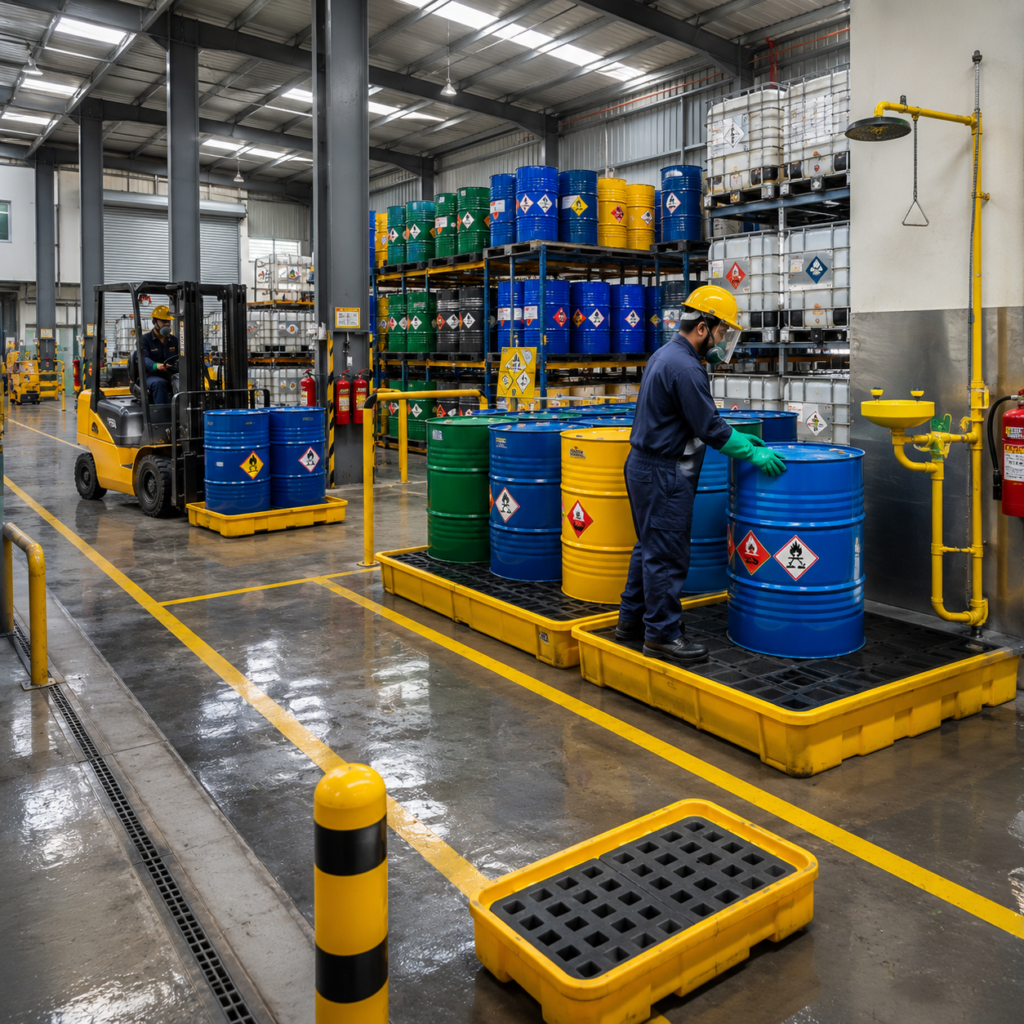
- Store waste for no more than 90 days, unless the SPCB grants an extension (Rule 8).
- Package and label waste per Form 8, and brief transporters using Form 9 (Rule 17–18).
- Report any accident immediately to the SPCB, followed by a written Form 11 report (Rule 22).
- Be liable for environmental or third-party damage caused by improper handling (Rule 23).
State Government
- Ensure environmentally sound management of hazardous and other wastes in the State (Rule 5).
- Ensure recognition, registration, skill development, and annual safety/health monitoring of workers across the entire waste-handling chain (Rule 5(2), broadened by the 2020 amendment).
State Pollution Control Board (SPCB)
- Grant, refuse, suspend, or cancel authorisation under Rule 6–7.
- Maintain a public-inspectable register of authorisation conditions.
- Approve TSDF design and layout, and monitor setup and operation (Rule 16).
- Compile an annual State inventory of waste generated, recycled, and disposed, and submit it to CPCB by 30 September.
- Decide appeals is not an SPCB function — that sits with the State’s Environment Secretary (Rule 24) — but the SPCB order is what triggers the appeal.
Central Pollution Control Board (CPCB)
- Issue standard operating procedures and technical guidelines for environmentally sound management (Rule 10).
- Approve waste-utilisation trial runs where no SOP yet exists (Rule 9).
- Prepare a consolidated annual review report for MoEFCC by 30 December (Rule 20).
- Under Chapter VII and Schedule IX: operate the EPR portal, generate EPR certificates, conduct audits, and run the Steering Committees for used oil and waste tyre EPR.
Ministry of Environment, Forest and Climate Change (MoEFCC)
- Act as the nodal Ministry for all transboundary movement of hazardous and other waste (Rule 11).
- Decide import/export permission applications (Form 5) within 60 days (Rules 13–14).
Importer / Exporter
- Apply in Form 5 to MoEFCC, with Prior Informed Consent (PIC) where Schedule III Part A or Schedule VI applies.
- Furnish Form 6 (movement document) and Schedule VIII documents to Customs for Part D of Schedule III imports.
- Maintain Form 3 records and file Form 4 annual returns for imported/exported waste.
Trader (Importing on Behalf of Actual Users)
- Obtain one-time authorisation in Form 7, granted as Form 7A since the 2021 amendment.
- Append the Form 7A authorisation to every Form 6 filing.
Transporter
- Carry Form 9 (TREM card) and ensure containers are labelled per Form 8.
- Accept waste only against signed Copies 3–7 of the Form 10 manifest.
- Comply with Motor Vehicles Act rules and CPCB transport guidelines.
TSDF Operator
- Design and set up the facility per CPCB technical guidelines, with SPCB approval for layout.
- Maintain Form 3 records and file Form 4 annual returns.
- Execute a defined closure and post-closure plan.
Customs Authorities
- Verify Schedule VIII documents before clearing Part D of Schedule III imports.
- Verify the Form 6 movement document and, where applicable, an accredited laboratory’s test report.
Registration and Forms at a Glance
| Form | Purpose | Who Files It |
|---|---|---|
| Form 1 | Application for authorisation | Occupier, to SPCB |
| Form 2 | Authorisation certificate, valid 5 years | Issued by SPCB |
| Form 3 | Ongoing record of hazardous/other waste handled | Occupier / TSDF operator / importer / exporter |
| Form 4 | Annual return, due 30 June | Occupier / TSDF operator |
| Form 5 | Import/export application | Actual user (import) / Occupier (export), to MoEFCC |
| Form 6 | Transboundary movement document | Exporter / Importer, accompanies shipment |
| Form 7 | Application for one-time trader authorisation | Trader importing on behalf of actual users |
| Form 7A | Grant of one-time trader authorisation (added 2021) | Issued by SPCB; appended to Form 6 |
| Form 8 | Container labelling format | Occupier / TSDF operator |
| Form 9 | TREM (Transport Emergency) card | Sender, given to transporter |
| Form 10 | Manifest — 7 colour-coded copies | Sender prepares; travels with every domestic shipment |
| Form 11 | Accident report | Occupier / operator / transporter, after immediate SPCB notification |
| Form 12 | Appeal against SPCB order | Aggrieved party, to State Environment Secretary, within 30 days |
Key detail: Since the 2021 amendment, traders can no longer rely on a single Form 7 application — they must obtain a separately granted Form 7A authorisation, appended to every Form 6 filing.
The Schedules at a Glance
| Schedule | What It Covers |
|---|---|
| Schedule I | Processes generating hazardous waste (e.g., petrochemical operations, zinc/lead/copper smelting) |
| Schedule II | Concentration limits (Class A, TCLP/STLC-based) that determine hazard status by waste constituent |
| Schedule III | Import/export classification — Part A (PIC + MoEFCC permission), Part B (MoEFCC permission only), Part C (hazard characteristics), Part D (Customs-only procedure) |
| Schedule IV | Commonly recyclable hazardous wastes eligible for a lighter registration path |
| Schedule V | Specifications of used oil suitable for recycling |
| Schedule VI | Absolute prohibition list — no import permitted under any circumstance |
| Schedule VII | Table of authorities (MoEFCC, CPCB, SPCB, Customs, DGFT) and their respective duties |
| Schedule VIII | Documents Customs must verify for Part D of Schedule III imports |
| Schedule IX | Extended Producer Responsibility (EPR) framework for waste tyres (inserted 2022) |
The Extended Producer Responsibility (EPR) Framework for Used Oil — Chapter VII
Inserted by the Second Amendment Rules, 2023 (in force from 1 April 2024), Chapter VII (Rules 25–43) built a full EPR system for used oil — mirroring the certificate-trading model already used for e-waste, plastics, and batteries.
How Used-Oil EPR Works, Step by Step
- Registration. Producers, collection agents, recyclers, and used-oil importers must register with CPCB on the online portal (Rule 26). An entity spanning multiple roles registers separately under each.
- Setting targets. Producers and importers are assigned annual recycling targets under Rule 27 (see table below).
- Recycling happens through registered recyclers. Registered recyclers process used oil and, based on the quantity and end-product recovered, are issued EPR certificates by CPCB (Rule 28).
- Producers buy EPR certificates. Producers and importers meet their obligations by purchasing certificates from registered recyclers, quarterly (Rule 29).
- Annual and quarterly reporting. Each role files its own returns on the portal (Rules 31–35).
- Non-compliance is penalised. Environmental Compensation is levied for shortfalls, false certificates, or unregistered dealing (Rule 39).
Used-Oil Recycling Targets (Rule 27)
| Year | Target for Producers |
|---|---|
| 2024–25 | 5% of base/lubrication oil sold or imported in 2022–23 |
| 2025–26 | 10% (based on 2023–24 sales) |
| 2026–27 | 20% (based on 2024–25 sales) |
| 2027–28 | 20% (based on 2025–26 sales) |
| 2028–29 | 40% (based on 2026–27 sales) |
| 2029–30 | 40% (based on 2027–28 sales) |
| 2030–31 onward | 50% of sales two years prior (rolling basis) |
Used oil importers face a simpler target: 100% of the previous year’s imports, with import permitted only for re-refining purposes.
EPR Certificate Weightage (Rule 28)
| End Product | Weightage (WP) |
|---|---|
| Re-refined base oil or lubrication oil | 1.0 |
| Co-processing / utilisation / energy recovery | 0.25 |
Certificate quantity formula: QEPR = QP × CF × WP — where QP is the end-product quantity, CF is CPCB’s conversion factor, and WP is the weightage above. Certificates are valid for 2 years from the end of the financial year of generation.
Environmental Compensation and Refunds (Rule 39)
Paying environmental compensation does not discharge the EPR obligation — the shortfall carries forward up to 3 years, with a tapering refund:
| Corrected Within | Refund |
|---|---|
| 1 year | 85% |
| 2 years | 60% |
| 3 years | 30% |
| After 3 years | 0% — forfeited |
A recycler over-generating certificates by more than 5% of actual recycled waste loses registration outright, with no refund; a third such violation results in permanent revocation.
Extended Producer Responsibility for Waste Tyres — Schedule IX
Inserted by the Sixth Amendment Rules, 2022 (via the new Rule 9(4)), Schedule IX applies the same EPR logic to waste tyres — covering tyre producers, importers of new/waste tyres and tyre-fitted vehicles, and recyclers/retreaders. It follows the same architecture as Chapter VII: registration, annual EPR targets, certificate generation and trading, and oversight by a dedicated Steering Committee. Its contravention clause (paragraph 11) was substituted by the Tenth Amendment, 2024 to align with the Jan Vishwas (Amendment of Provisions) Act, 2023 (see the amendment timeline below).
Import and Export Procedure
| Schedule III Part | Import Route |
|---|---|
| Part A | Actual users, with Prior Informed Consent (PIC) of the exporting country and MoEFCC permission |
| Part B | Actual users, with MoEFCC permission only — no PIC required |
| Part C | Hazard-characteristic catch-all — requires prior written MoEFCC permission |
| Part D | No MoEFCC permission needed — importer furnishes Form 6 and Schedule VIII documents directly to Customs |
| Schedule VI | Absolutely prohibited — no import permitted under any route |
MoEFCC decides Part A/B applications within 60 days, checking that the importer has environmentally sound facilities, adequate treatment/disposal arrangements, valid SPCB authorisation, and PIC (for Part A). Export follows a mirror process under Rule 14: Form 5 with insurance cover, PIC from the importing country for Part A/Schedule VI waste, and no shipment before PIC is received. Samples up to 1000 gm/1000 ml for testing/R&D are exempt from import permission (Rule 13(9)).
The Manifest System — Form 10
Rule 19 requires a 7-copy, colour-coded manifest for every domestic movement of hazardous or other waste:
| Copy | Colour | Routing |
|---|---|---|
| 1 | White | Sender → SPCB |
| 2 | Yellow | Retained by sender (after transporter’s signature) |
| 3 | Pink | Retained by receiver |
| 4 | Orange | Receiver → Transporter |
| 5 | Green | Receiver → their SPCB |
| 6 | Blue | Receiver → Sender |
| 7 | Grey | Receiver → Sender’s SPCB (if in a different State) |
No transporter may accept waste without signed Copies 3–7 in hand. Since the 2021 amendment (Rule 19(7)), this manifest requirement does not apply to “other wastes” listed in Part D of Schedule III.
Storage, Labelling, and Transport Requirements
- Storage limit: 90 days maximum on-site (Rule 8), extendable by the SPCB in specified cases.
- Labelling: Non-washable, weatherproof labels per Form 8 (Rule 17).
- Transport documentation: Form 9 (TREM card) accompanies every shipment (Rule 18).
- Inter-State disposal transport: requires a No Objection Certificate from both States’ SPCBs.
- Inter-State recycling/utilisation transport: requires prior intimation to both SPCBs (lighter than an NOC).
- Transit through a third State: requires prior intimation to that State’s SPCB.
Environmental Compensation and Penalties
Environmental Compensation and prosecution under Section 15 of the Environment (Protection) Act, 1986 apply for:
- Operating without authorisation mandated under Rule 6.
- Contravention of any provision of the rules or authorisation conditions (Rule 7, Rule 23).
- Under Chapter VII: providing incorrect information for EPR certificates, using forged certificates, or wilfully violating the used-oil EPR chapter (Rule 40).
- Under Schedule IX: contravention of the waste-tyre EPR provisions.
The SPCB’s power to levy financial penalties under Rule 23 requires CPCB’s prior approval. For Chapter VII, environmental compensation is levied in addition to, not instead of, prosecution under Rule 40.
Timeline: How the Rules Have Evolved
Hazardous and Other Wastes (Management and Transboundary Movement) Rules, 2016 (notified 4 April 2016)
The original rules, superseding the 2008 Rules, establishing the authorisation, storage, import/export, TSDF, packaging/transport, manifest, and records framework described above.
Amendment 1 — G.S.R. 670(E), dated 6 July 2016
- Inserted Rule 12(6A), permitting SEZ units to import B3010 solid plastic waste that would otherwise sit on the Schedule VI prohibition list.
- Rewrote the Schedule III note on multifunction print/copy machines to require Customs verification under Schedule VIII rather than open free trade.
- Added an SEZ-only import note under Schedule VI’s B3010 entry.
Amendment 2 — G.S.R. 177(E), dated 28 February 2017
- Extended the Rule 12(6A) concession to Export Oriented Units (EOUs), alongside SEZ units.
- Moved B3010 “Polymethyl methacrylate” waste out of the Schedule VI ban and into Schedule III Part B — making it genuinely importable with MoEFCC permission.
Amendment 3 — G.S.R. 544(E), dated 11 June 2018
- Opened an import pathway under Schedule III Part D (Basel No. B1110) for used electrical/electronic assemblies imported by DSIR-approved R&D units, or STPI/EHTP/EOU/BTP units with at least ₹50 crore in R&D investment.
- Extended the same pathway to used plant and machinery with at least 5 years’ residual life, for electronics manufacturers.
- Added a new Schedule VIII documentation requirement: a Chartered Engineer’s certificate (or equivalent from an accredited agency in the exporting country) confirming residual life, alongside Form 6.
Amendment 4 — G.S.R. 178(E), dated 1 March 2019
- Defined “waste collector” for the first time (Rule 3(1), clause 40).
- Inserted Rule 6(1A) — a genuine exemption from HOWM authorisation where Water Act/Air Act consent isn’t required, provided waste goes to an authorised actual user, waste collector, or disposal facility.
- Fully withdrew the Rule 12(6A) SEZ/EOU concession introduced in 2016–17 — the sub-rule was omitted entirely.
- Removed the B3010 “Polymethyl methacrylate” entry from Schedule III Part B.
- Substituted the Schedule III Part B entry on silk waste (Basel No. B3030).
Fifth Amendment Rules, 2020 — G.S.R. 641(E), dated 9 October 2020
- Broadened Rule 5(2)’s worker-protection clauses (registration, skill development, safety/health monitoring) to cover the entire hazardous-waste handling chain — generation, handling, collection, reception, treatment, transport, storage, reuse, recycling, recovery, pre-processing, utilisation (including co-processing), and disposal — rather than a narrower activity list.
Second Amendment Rules, 2021 — G.S.R. 798(E), dated 12 November 2021
- Substituted “hazardous wastes” with “hazardous and other wastes” throughout Rule 3(1)(3), harmonising terminology.
- Tightened the definition of “other wastes” (Rule 3(1)(23)) to specifically mean Part B and Part D of Schedule III, plus notified indigenous wastes.
- Streamlined Rule 9’s utilisation-authorisation and trial-run approval language.
- Replaced the single-step Form 7 trader authorisation with a two-step process: Form 7 application, then a separately granted Form 7A, appended to Form 6.
- Inserted Rule 19(7), exempting Part D of Schedule III waste from the full 7-copy manifest requirement.
- Amended Schedule III and Schedule VIII.
Sixth Amendment Rules, 2022 — G.S.R. 593(E), dated 21 July 2022
- Inserted Rule 9(4), the enabling clause for waste-tyre EPR.
- Inserted an entirely new Schedule IX — Extended Producer Responsibility (EPR) for Waste Tyre, following draft-rule pre-publication for public comment.
Second Amendment Rules, 2023 — G.S.R. 677(E), dated 18 September 2023 (in force from 1 April 2024)
- Inserted an entirely new Chapter VII — Extended Producer Responsibility for Used Oil (Rules 25–43) after Chapter VI.
- Established registration, targets, certificate generation/trading, role-specific responsibilities (producer, importer, collection agent, recycler, bulk generator, CPCB, State Government, BIS), environmental compensation, prosecution, verification/audit, and a Steering Committee — all specific to used oil.
Ninth Amendment Rules, 2024 — G.S.R. 177(E), dated 12 March 2024
- Inserted Rule 3, paragraph 9(6) — allowing the Central Government to relax return/report filing timelines for producers, recyclers, and retreaders by up to 9 months, in the public interest.
- Inserted Form 2, Clause 15(i) — hazardous waste generated sporadically due to unforeseen events (fire, calamity, chemical spill) must be sent to a disposal facility or actual user.
- Inserted Form 2, Clause 15(ii) — routinely generated new hazardous waste must be added to the authorisation within 1 month of identification (except where production exceeds consented capacity).
- Amended Forms 2, 3, and 4.
Tenth Amendment Rules, 2024 — G.S.R. 698(E), dated 12 November 2024
- Substituted Rule 40 (Chapter VII prosecution clause) to align with the Jan Vishwas (Amendment of Provisions) Act, 2023.
- Substituted Schedule IX, paragraph 11 (waste-tyre contravention clause), on the same basis.
- Both now read: “Any person who fails to comply or contravenes the provisions of these rules shall be liable to a penalty in accordance with the provisions of section 15 of the Act” — reflecting the shift from “prosecution” language toward “penalty” language, consistent with the decriminalisation exercise under the Jan Vishwas Act.
Best Practices for Compliance
- File Form 1 early. The SPCB has up to 120 days to process it — late filing directly delays your legal authorisation to operate.
- Track the 90-day storage clock per waste lot. Apply to the SPCB in advance if a genuine extension is needed — don’t wait until day 89.
- Check Schedule VI before anything else when planning an import. If your waste is listed there, no PIC or MoEFCC application will help.
- Reconcile Form 3 running records against your Form 4 annual return before filing — mismatches are a common audit flag.
- Keep indigenous and imported waste accounting separate, both in Form 3 records and under Chapter VII’s used-oil EPR portal.
- Confirm whether Form 7 or Form 7A applies if you’re a trader who registered before the 2021 amendment.
- Route accident-generated waste per Form 2 Clause 15(i) rather than waiting for an emergency authorisation amendment.
- Purchase used-oil EPR certificates quarterly, not in a year-end rush — Rule 29 requires proportionate quarterly fulfilment.
Common Mistakes to Avoid
- Assuming the SEZ/EOU plastic-waste import concession (Rule 12(6A)) still applies — it was fully withdrawn in 2019.
- Letting a 5-year authorisation lapse without applying for renewal 3 months in advance.
- Traders continuing to rely on a single old-style Form 7 authorisation without the Form 7A grant required since 2021.
- Applying the full 7-copy manifest to Part D of Schedule III shipments, which have been exempt since 2021.
- Treating environmental compensation as a substitute for the underlying EPR obligation — under Chapter VII, the shortfall still carries forward.
- Forgetting that used-oil import is permitted only for re-refining, not any other use.
- Overlooking the separate E-Waste Rules, 2011 EPR-authorisation requirement for certain B1110 imports.
Frequently Asked Questions (FAQ)
Q1. How many amendments have been made to the HOWM Rules, 2016?
Ten, from G.S.R. 670(E) in July 2016 through G.S.R. 698(E) in November 2024.
Q2. How many principal Rules, Schedules, and Forms does the framework contain?
24 principal Rules (plus 19 more under Chapter VII, inserted in 2023), 9 Schedules, and 13 Forms (12 original plus Form 7A).
Q3. Do I need authorisation if I don’t need Water Act or Air Act consent?
Not necessarily — Rule 6(1A), inserted in 2019, exempts you, provided the waste goes to an authorised actual user, waste collector, or disposal facility.
Q4. Is a HOWM authorisation still valid for only 5 years?
Yes — unlike some other EPR frameworks, Rule 6(2) fixes a 5-year validity period, renewable 3 months before expiry.
Q5. Can hazardous waste be imported for disposal?
No. Rule 12(1) permits import only for recycling, recovery, reuse, or utilisation (including co-processing) — never for disposal.
Q6. What’s the difference between Schedule III and Schedule VI?
Schedule III (Parts A–D) governs conditional import/export with varying levels of permission required. Schedule VI is an absolute prohibition list — no permission route exists around it.
Q7. Do EPR certificates under Chapter VII expire?
Yes — 2 years from the end of the financial year in which they were generated.
Q8. What happens if a used-oil producer misses its EPR target?
CPCB levies Environmental Compensation. If the shortfall is corrected within 3 years, part of the compensation is refunded on a sliding scale (85% within 1 year, 60% within 2, 30% within 3); after 3 years it’s forfeited.
Q9. Did the penalty provisions change recently?
Yes. The Tenth Amendment (G.S.R. 698(E), 12 November 2024) substituted Rule 40 and Schedule IX paragraph 11 to align with the Jan Vishwas (Amendment of Provisions) Act, 2023, shifting the language from “prosecution” toward “penalty.”
Q10. Does the manifest system apply to all waste movements?
No — since the 2021 amendment, “other wastes” under Part D of Schedule III are exempt from the 7-copy manifest requirement.
Conclusion
The Hazardous and Other Wastes (Management and Transboundary Movement) Rules, 2016 have grown considerably since their original notification – from a waste-management and transboundary-movement rulebook into a framework that now also carries two full Extended Producer Responsibility regimes for waste tyres and used oil. The ten amendments since 2016 show a regulator steadily refining the system: tightening and then withdrawing import concessions, closing definitional gaps, formalizing trader authorization into a two-step process, and – most recently – aligning penalty language with the broader decriminalization exercise under the Jan Vishwas Act.
For occupiers, importers, exporters, recyclers, and TSDF operators, staying compliant means treating this as a living framework rather than a one-time authorisation exercise — tracking amendments, maintaining Form 3/4 records in real time, and understanding exactly which Schedule III Part or Schedule governs each waste stream before an import, export, or utilization decision is made.
References
- Hazardous and Other Wastes (Management and Transboundary Movement) Rules, 2016 — G.S.R. 395(E), dated 4 April 2016, Ministry of Environment, Forest and Climate Change, Gazette of India, Extraordinary, Part II, Section 3, Sub-section (i).
- Amendment Rules, 2016 — G.S.R. 670(E), dated 6 July 2016.
- Amendment Rules, 2017 — G.S.R. 177(E), dated 28 February 2017.
- Amendment Rules, 2018 — G.S.R. 544(E), dated 11 June 2018.
- Amendment Rules, 2019 — G.S.R. 178(E), dated 1 March 2019.
- Fifth Amendment Rules, 2020 — G.S.R. 641(E), dated 9 October 2020.
- Second Amendment Rules, 2021 — G.S.R. 798(E), dated 12 November 2021.
- Sixth Amendment Rules, 2022 — G.S.R. 593(E), dated 21 July 2022 (inserted Schedule IX — EPR for Waste Tyre).
- Second Amendment Rules, 2023 — G.S.R. 677(E), dated 18 September 2023 (inserted Chapter VII, Rules 25–43 — EPR for Used Oil).
- Ninth Amendment Rules, 2024 — G.S.R. 177(E), dated 12 March 2024.
- Tenth Amendment Rules, 2024 — G.S.R. 698(E), dated 12 November 2024 (aligning Rule 40 and Schedule IX paragraph 11 with the Jan Vishwas (Amendment of Provisions) Act, 2023).
- Jan Vishwas (Amendment of Provisions) Act, 2023 (18 of 2023) — cited in G.S.R. 698(E) as the basis for aligning penalty language under the Environment (Protection) Act, 1986.
- Hazardous Waste (Management, Handling and Transboundary Movement) Rules, 2008 — superseded by the 2016 Rules.
- Relevant provisions referred to in this article: Rules 1–43 and Schedules I–IX of the HOWM Rules, 2016; Forms 1–12 and 7A; amending provisions of the 2016–2024 amendment notifications.
📚 Read More EHS Guides
Expand your knowledge with our other comprehensive Environment, Health & Safety (EHS) guides:
- Battery Waste Management Rules, 2022 – Complete Guide with Latest Amendments
- E-Waste Management Rules, 2022 – Complete Compliance Guide
- Plastic Waste Management Rules, 2016 – Explained
- EPR Plastic Packaging India: Complete Guide to CPCB Compliance (2026)
Disclaimer: This article is an independent, simplified explanation of the Hazardous and Other Wastes (Management and Transboundary Movement) Rules, 2016 and its amendments for educational purposes. It does not reproduce the rules verbatim and is not a substitute for the official Gazette notifications. Organizations should refer to the official texts published by the Ministry of Environment, Forest and Climate Change and the Central Pollution Control Board for compliance purposes.